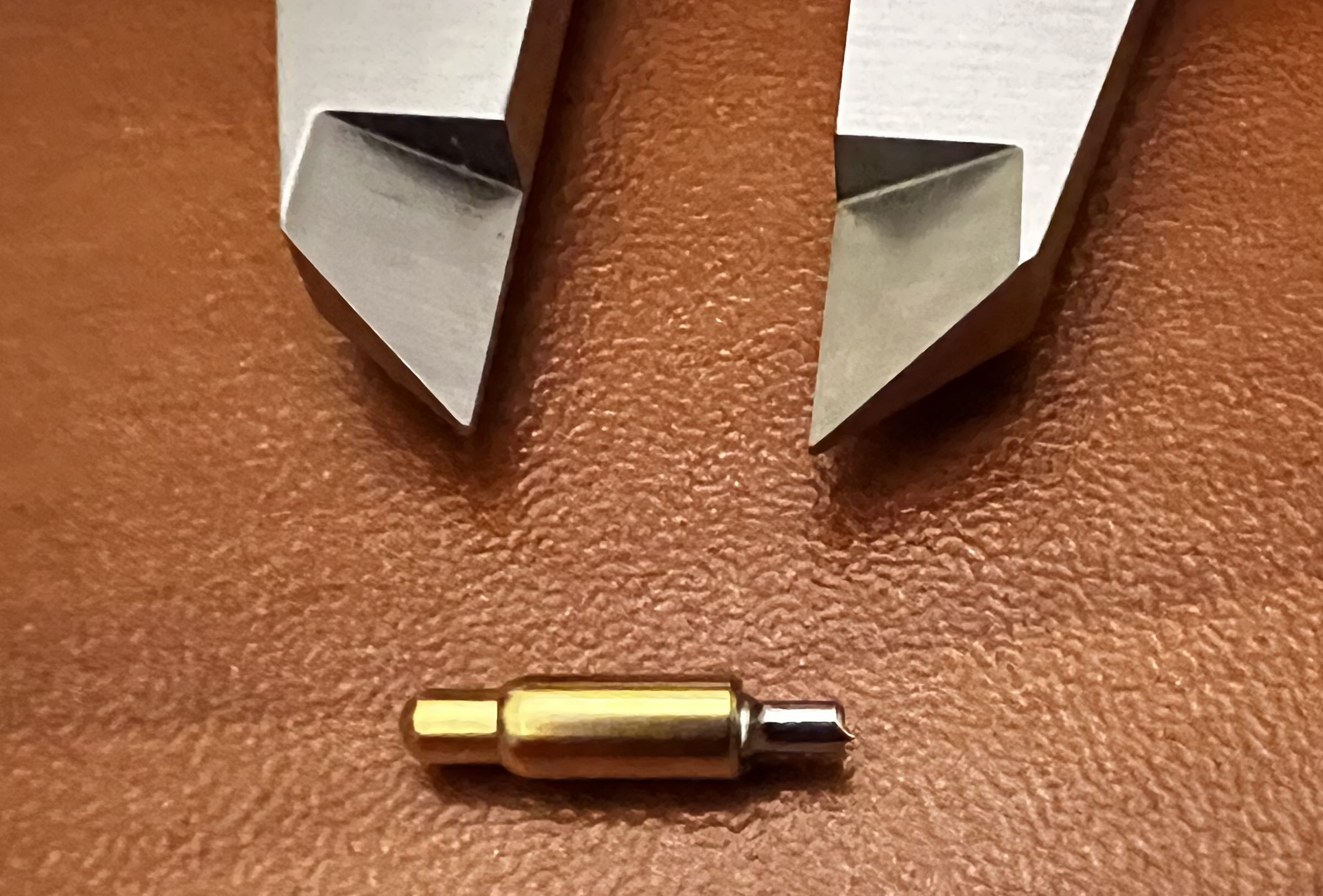
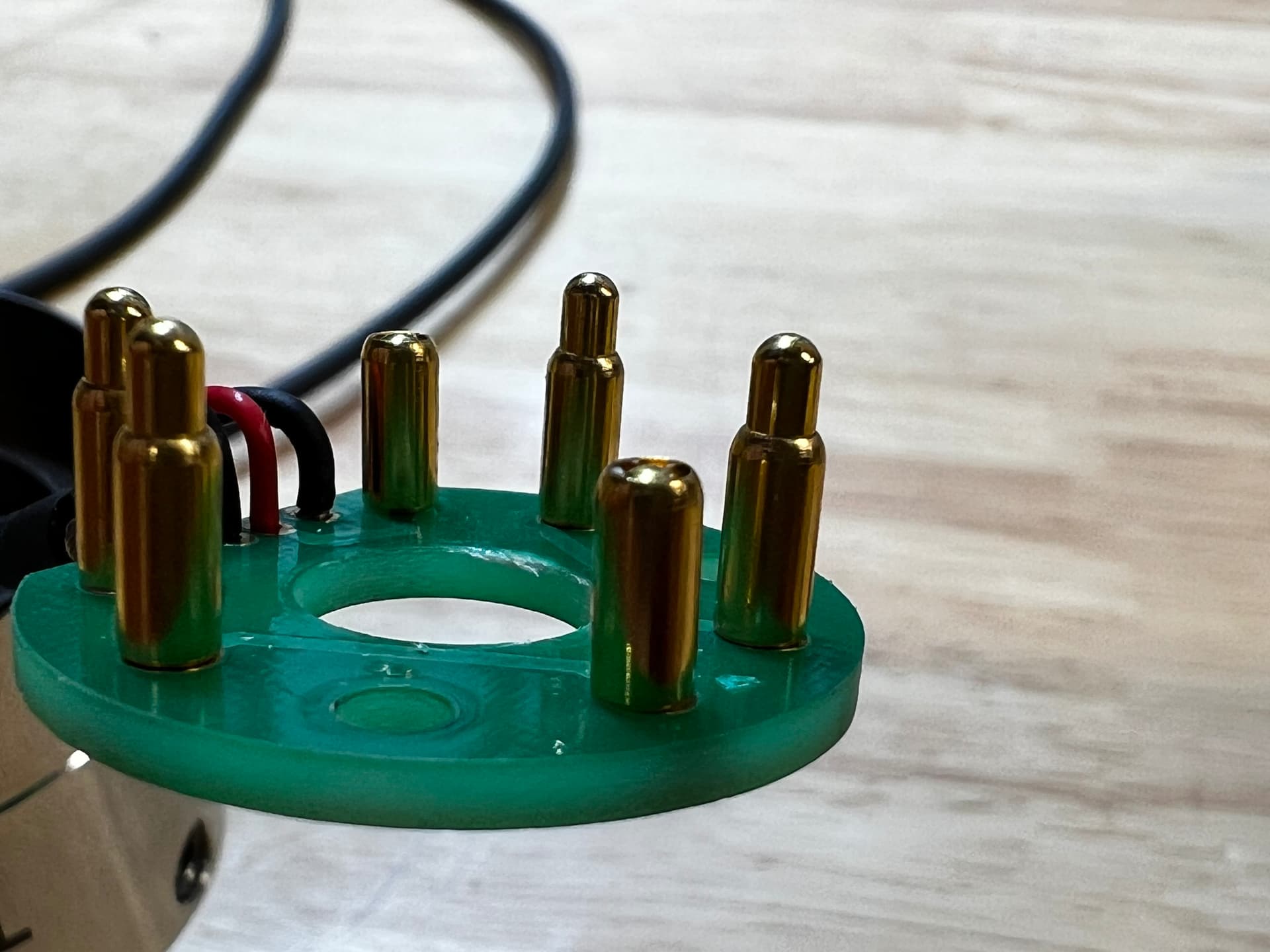
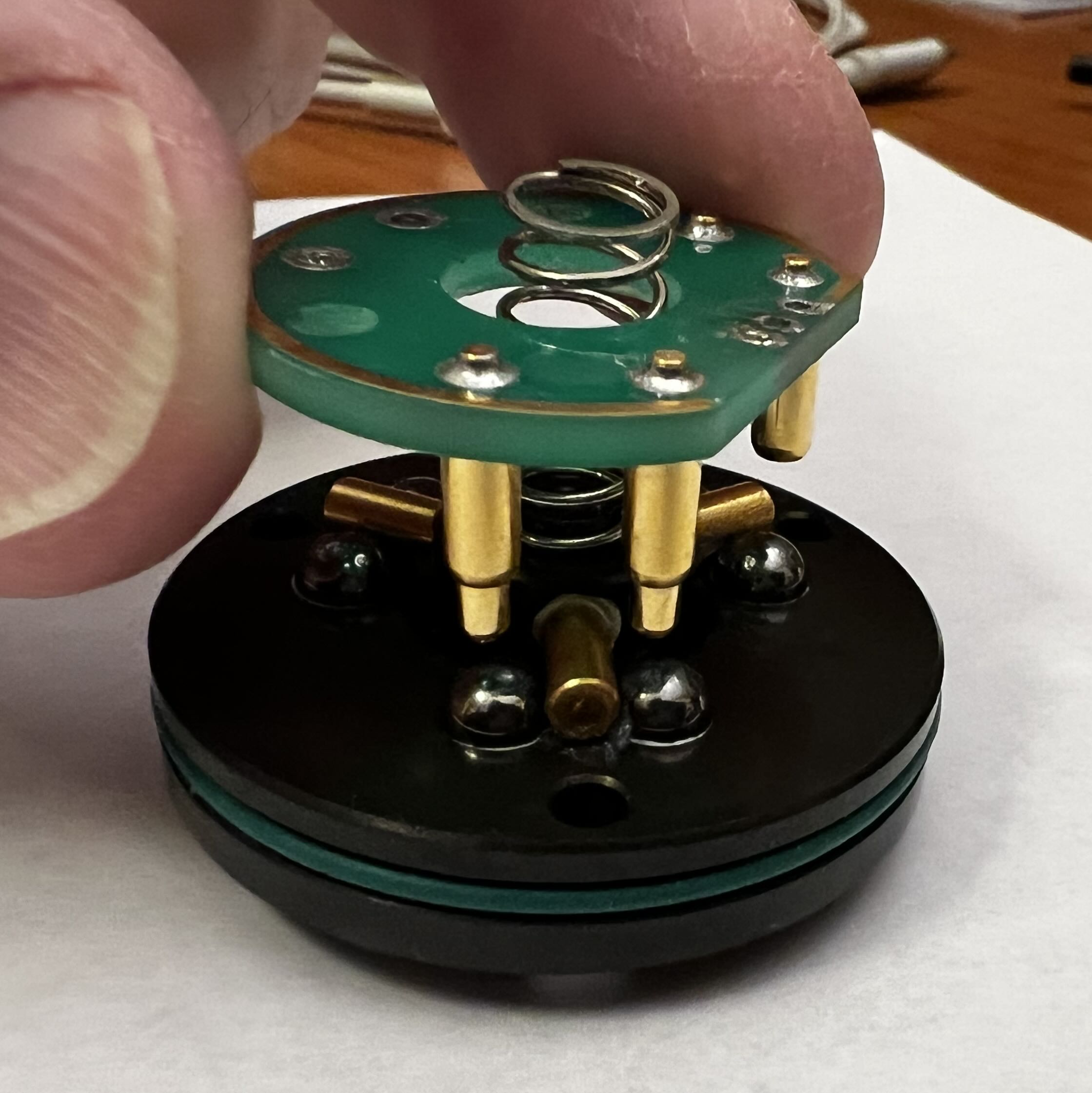
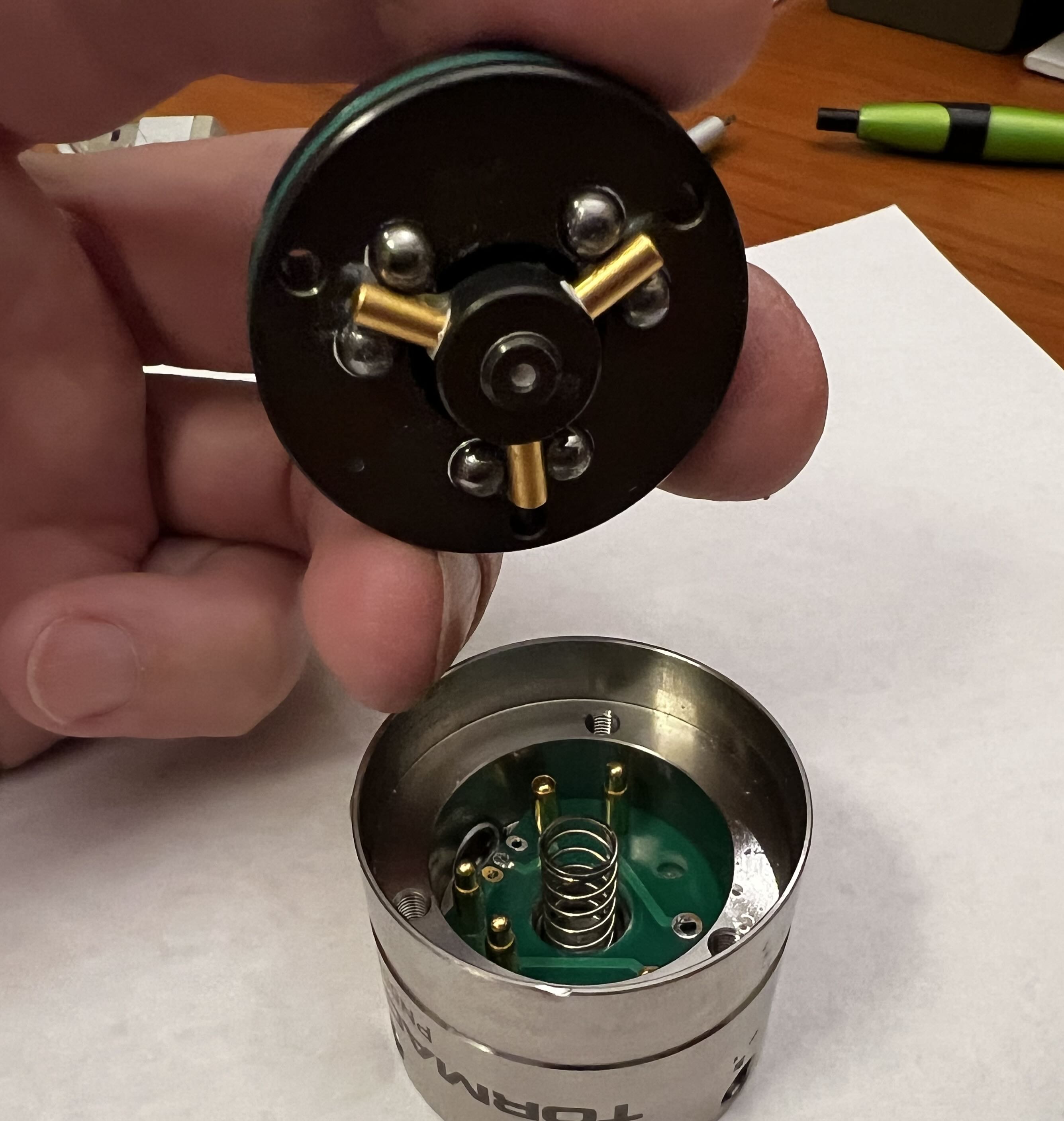
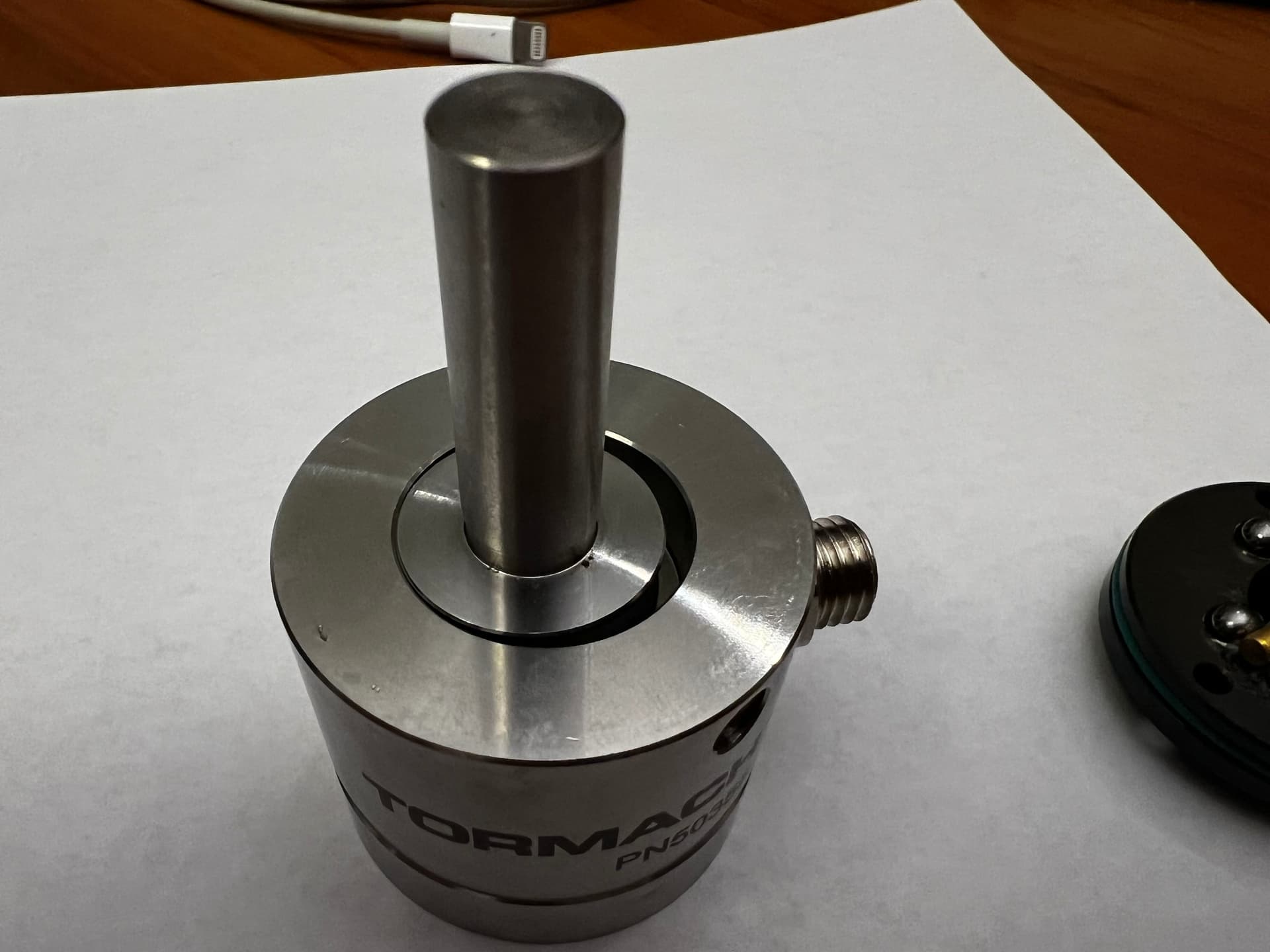
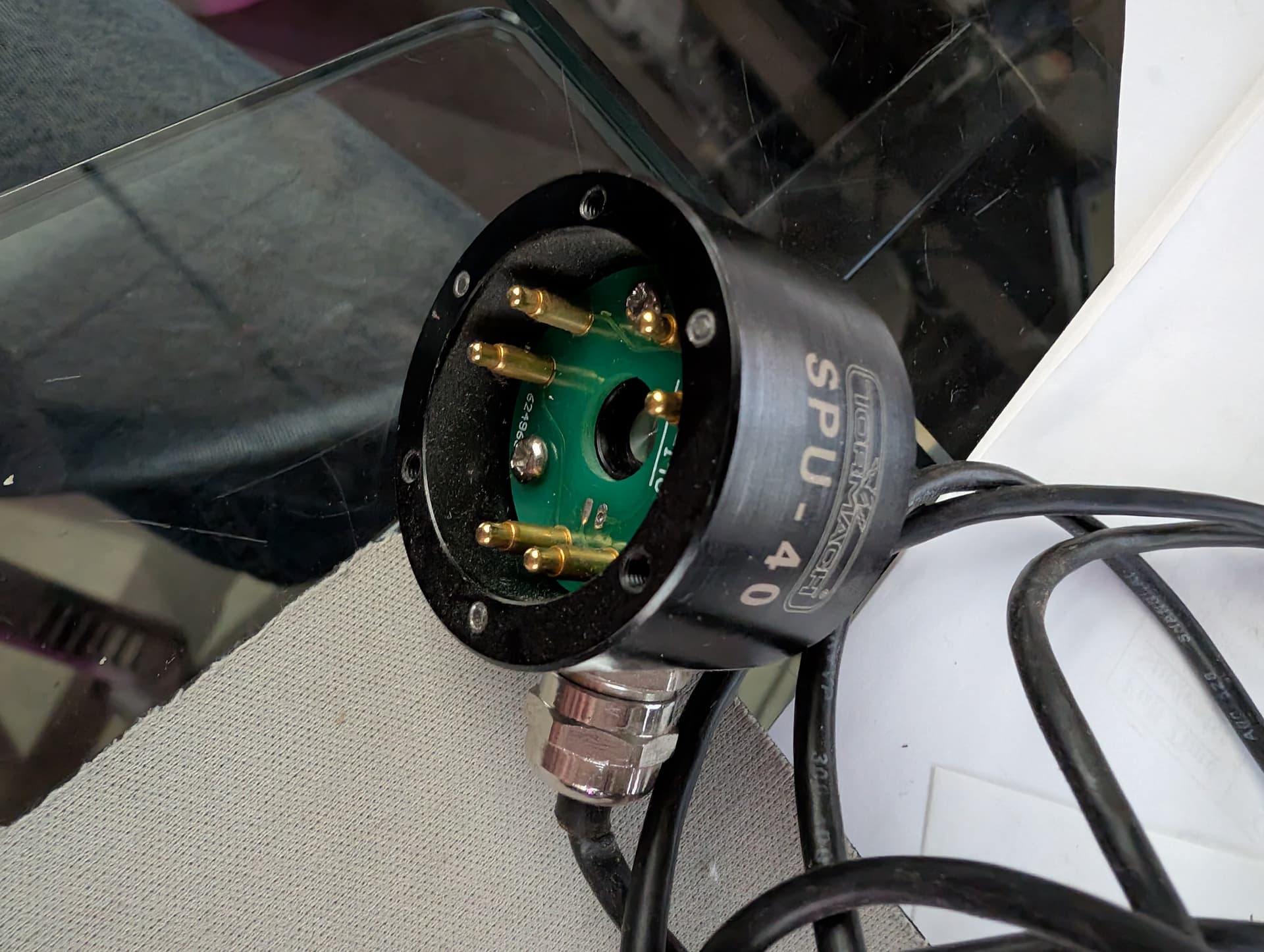
Had an unfortunate mistake with a Tormach passive probe - drove it down in Z while my other probe was plugged in. The only thing broken is 2 of the 6 spring loaded pins got crushed enough to jam. I’m sure it would wok if I replaced them.
I spent quite a bit of time on Digikey.com and Mouser.com trying to find replacements.
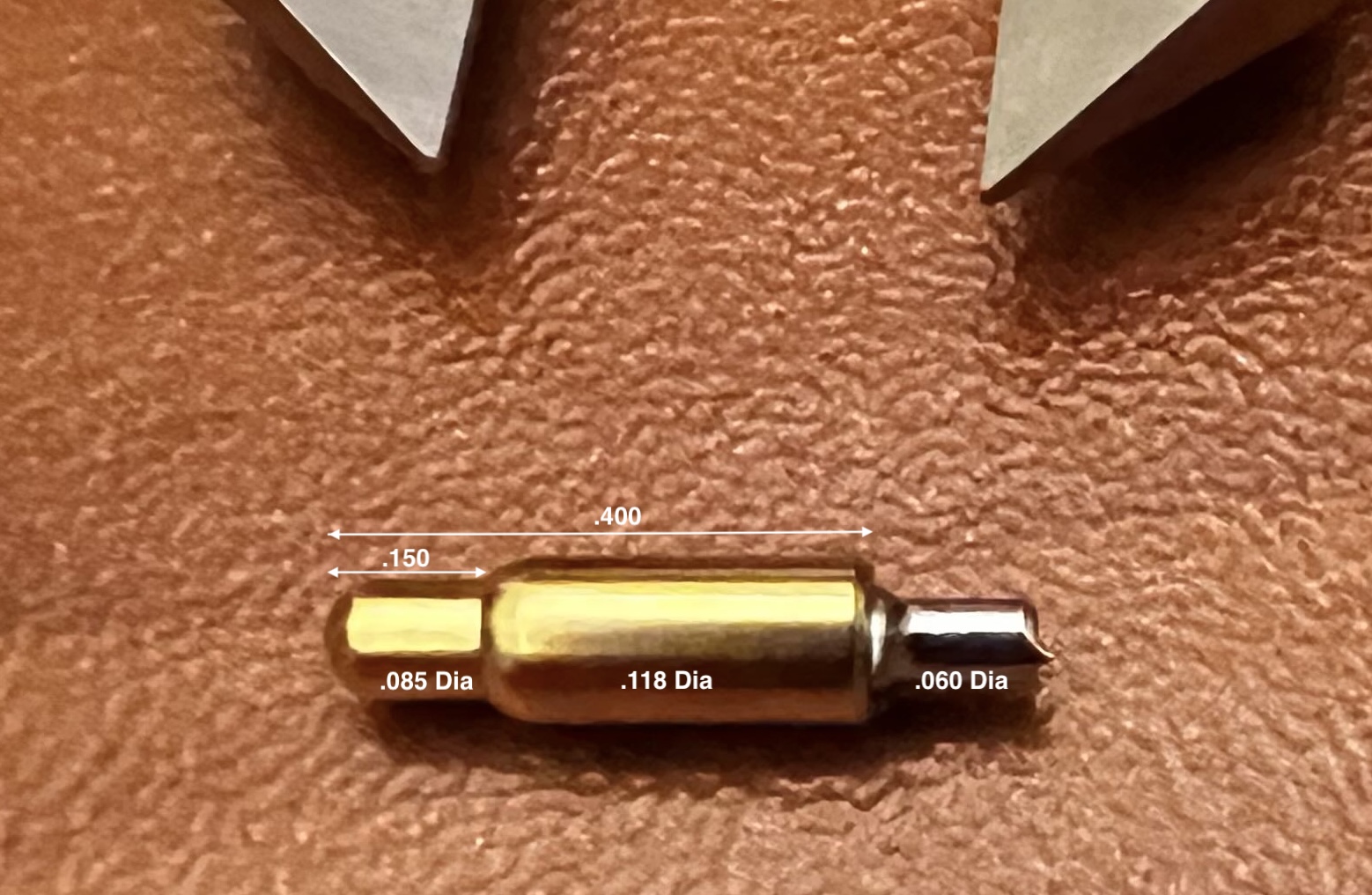
I couldn’t find any that matched diameters. The base/outer section is 3mm and the moving sprung pin is 2.16mm
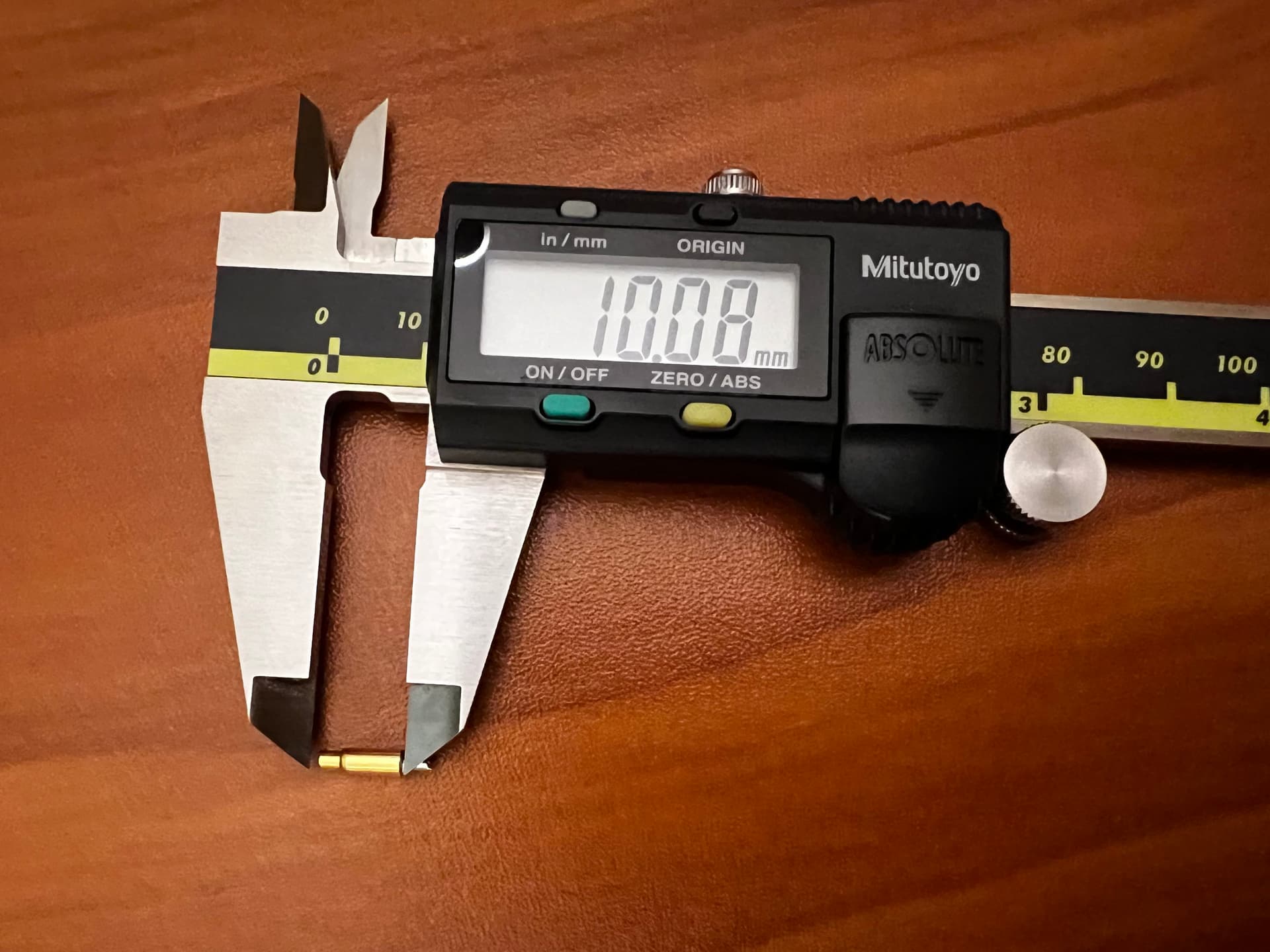
Total uncompressed length is ~10mm.
Any help suggestions for other places to look? I may have missed them on either site as the search functions are a little complicated for non-professionals - both sites have a huge quantity of small parts for building electronic stuff. I searched Pogo Pins and spring contacts with through-hole mounts.
If I can find something close and replace all 6 I should be able to get this probe functioning again.
Your talking ultra high tolerance parts. I think. Could be wrong. I’m just imagining that if the height between any of the 6 is off by .001mm then that would induce error multiplied by the length of the probe tip.
Just woke up, will have a think and come back.
I had a hell of a time when I replaced my probe tip with one from Amazon. The ball was not centered on the stick so no matter how much centering I did (of the actual probe) it as always off. Thus every part made with that probe tip was off, and on and on.
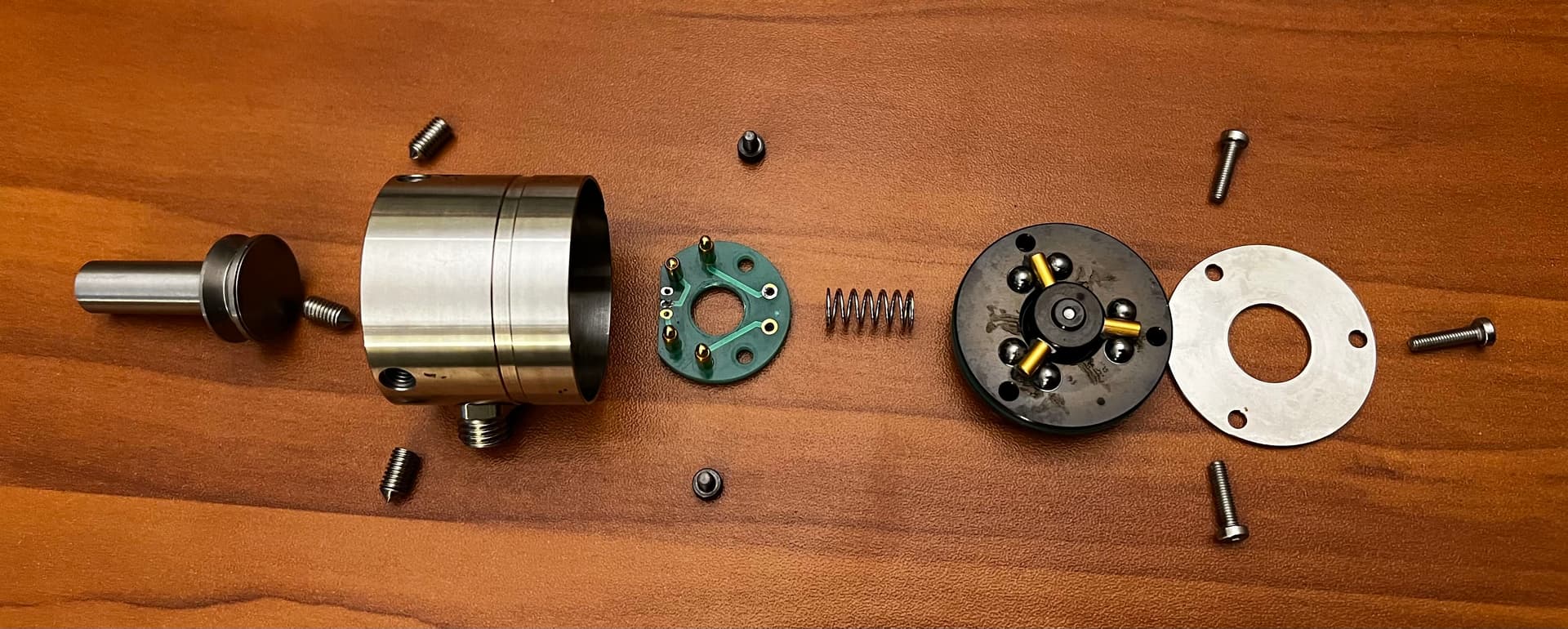
I’ll post pictures later. The pogo pins are not involved with probe tip accuracy in anyway other than completing the circuit to the actual kinematic “actuator” or pivot. The spring tips need to press against the the 6 balls that support the tri-bars of the probe, making contact and keeping the balls located in the plastic base.
How about reaching out to Cliff at Threadexpress. I’m not sure of what his internals look like, I’m sure if you watch a couple of his videos he shows them I just don’t remember. He might be able to point you in the right direction!
Since the pogos aren’t actually involved in the accuracy of the probe, anything roughly close should work fine. I’d be more concerned with the through hole pin diameter, then find something that has a free length equal to or longer than the original, and a compressed length equal to or less than the original. That will ensure it fits on the board and has sufficient travel. The diameters should make a difference.
Has two bores, deepest one supports the circuit board, shallow one supports the pivot base. The spacing determines how much the spring pins push against the balls.
Centering shank or arbor: allows the body to be positioned relative to spindle axis such that the ball is inline with the axis.
The pivot and base are designed such that the hub is kinematically accurately positioned in the same location. The preload spring assists in making sure it returns to a position defined by 3 points. Each set of balls constrain the supported rod, this is repeated 3 times such that the resting position of the hub is fully constrained. (I’m not an expert on this stuff and I’m probably not using the right terms). I think it’s an original Reinshaw patent.
It’s a beautiful design, in that the accuracy comes from the balls and shafts. The position of the balls and shaft alignments can be relatively sloppy. It’s the geometry that makes it work. Any side or upwards force applied to the probe tip will cause only one of the bars to lift and when removed the tip returns accurately.
The pins I need are just spring loaded against the balls to complete the circuit.
Regarding your issue of centering the tip of the probe - there is a (relative) ton of adjustment for the shank to the body that ought to be enough to accommodate any reasonable probe tip. If some part of the shank - body - pivot was bent or damaged that could make it difficult.
I’ve had to spend a lot of time aligning probe tips and it really took me awhile to get the hang of it. I was tightening the alignment screws way too tight. This can munge up the Vee grove in the shank/arbor and you get to a point where you are close and then all of a sudden the next turn of the screw makes everything jump.
The height and through hole pin diameter are the most important. The current existing pins have a radius / ball tip. I think that might be important also. So if I can find the proper length and choose the largest diameter with a good through hole pin it should work.
The radius is probably less important than you think. The pins only need to make good contact with the spider throughout it’s travel. Flat tips will result in a decreasing contact surface as the probe moves so domed is better for sure but I imagine the specific radius is not critical.
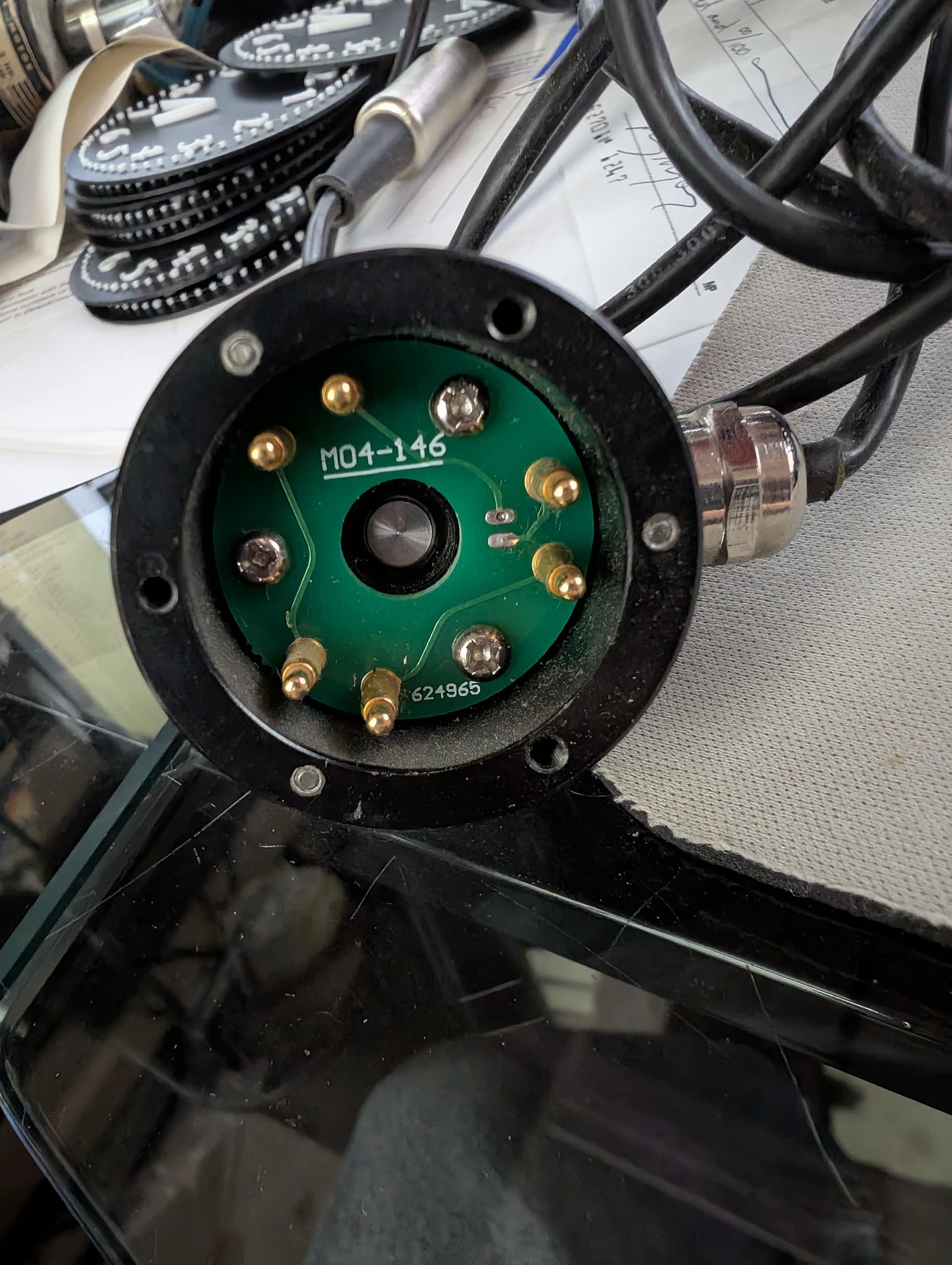
I have some parts that might be suitable, looks like the board is different but the pins might be the same. Can you measure the pins relative to the board so I can see if these parts might match up?
What’s the OD on your circuit board for curiousity’s sake?
I did find new pins with the correct size solder tail for the board and a height that I can work with if I shim the board - raising it - in the body.
My first post in this thread shows a removed pin with caliper - the height from the base/shoulder to the pin to is pretty close to 10mm. It’s a little hard to measure the removed pin as it is spring loaded and compresses. Also the height is not super critical - they are compressed in assembly.
I can take more complete measurements later and post them if you think it’s necessary.
I recently had to replace a pogo pin on my old ‘active’ probe. Got some from digi-key. The issue I had if I recall is the pin height in the spec for the pin is not the full, unloaded, height, but the maximum working height. The pin will be longer with nothing pressing it. I’m fairly sure that’s what I found.
There is a really good chance the pins from the SPU-40 are the same as yours.
can you dig up the part # or manufacturer? That would be really helpful.
I’ve been searching off and on for a few days and I’m just not finding pins that are close the diameter of what’s installed and have proper diameter solder tail.
Here is a pic with dimensions on it. The length dimensions are not super accurate.
The pins in the passive probe look like they’re the same dimensions as what you provided. It’s about 0.4” from the top of the dome to the PCB surface and they’re 0.118” diameter. I’ll send you a PM David.
I asked and got a flat no, both to parts and repair. I get it, I imagine most crashed probes are not worth the time and effort, any serious repair would quickly exceed the price of a new probe.
It would be useful if they could at least offer a source for the pins, but that also might be outside of their business. I really doubt they manufacture the probe.
If the mill had no parts or repair service it would be a very bad investment. Like new EV cars we lost the right to repair. I use a cheep Chinese probe that works fine. I have crashed this probe, forgot to plug it in! I was able to straighten the stylus and do internal repairs. My 50 dollar probe is expendable! Getting sub 0.001 “ reading with this probe requires custom tuning and techniques. I would like a higher quality probe, it must include support.
I have to disagree with you on “loosing the right to repair” - in regards to Tormach. That’s just not the case here. One of the reasons I chose Tormach is the openness of the their equipment AND software. They have not let me down. I seriously doubt that any other professional level CNC mfg is as open - Haas for instance. Do they provide source code for their UI?
I don’t expect Tormach to stock internal parts to something like a stepper controller and I’d expect to pay for a new replacement, which I’m sure they would sell me if I did something stupid like short it out with a screw driver.
That’s pretty much the case here. I did something stupid - crashed my probe - not their fault the probe was not defective, I broke it. Due to cost/return it’s not worth it for them to provide a repair service for probes anymore than it would be worth it for them to repair my hypothetical steeper controller above.
I can buy a new probe or I can fix it myself (which is what I’m attempting to do).