In the past I successfully used the CA approach without any issues. My approach was as follows:
Apply blue painters’ tape on both the part and base.
Use a small steel rod to burnish the tape down firmly
Apply Loctite professional to one side.
Clamp for an hour
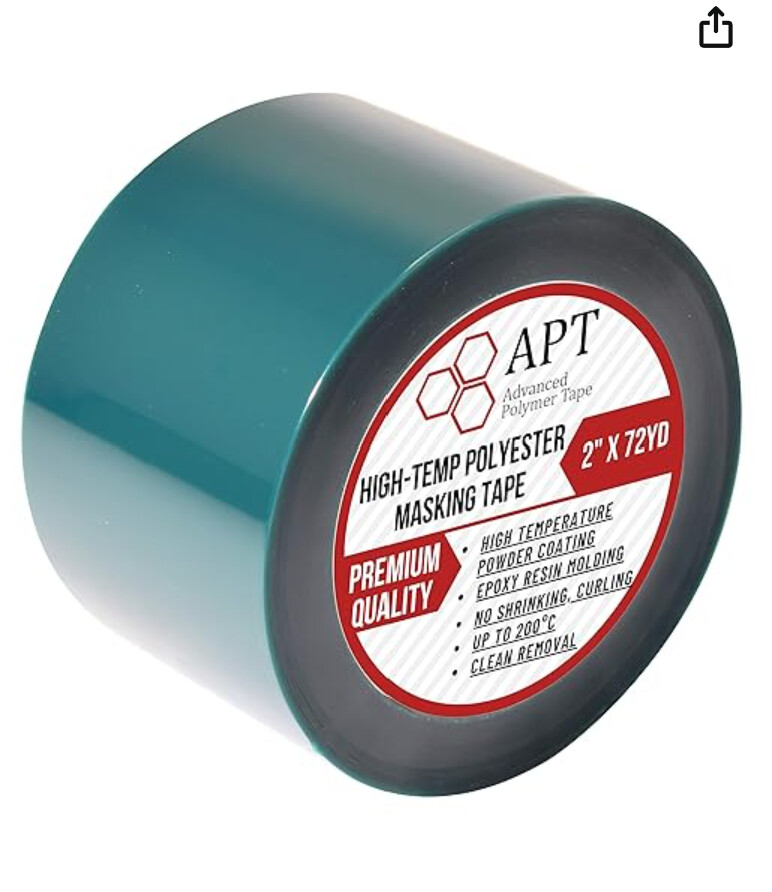
This worked perfectly well with MQL coolant, but when I tried with flood coolant, the coolant breaks down the tape. A number of Youtube videos suggest using APT powder coating tape shown below combined with some more esoteric and costly Loctite 4851 or Loctite 480.
I did a quick test using this same tape with Loctite professional and it came loose. I later learned that since powder coating tape has a shiny surface, you need to scuff it first with scotch Brite or sandpaper to allow the CA to stick. It is also suggested to scuff the part and base as well. Additionally, when I performed this test, I was rushing a bit an only clamped the part for 15 minutes. Since CA glues bond faster in humid environments and I live in the desert with 20% humidity, this may be the reason it did not hold.
Just curios what you guys are doing differently and what CA glues or tapes you may have tried?
I have just glued parts down without tape, metal to metal in the past. Works ok as long as you don’t get the glue hot enough to release or hit the plates hard enough to crack the glue.
Thanks Roy. I have never tried that. Did you have any issues releasing the part when you are done? Did you get any residue from the glue on the part? I had some parts stick very well in the past and heated a corner with butane or propane and pried it up .
I’ve had very mixed results with this method and flood coolant. I’ve done it lots of times without any issues, and a few times where the tape failed almost immediately. My process has always been the same as yours with respect to the burnishing and such so I’m not sure what changed (I usually only clamp for about 5-10 minutes, more has never been necessary for the glue to cure). Only thing I can really think of is perhaps the concentration of my coolant was lower during the times that it was working well.
In any event, while I am a strong proponent of flood coolant, if MQL is an option for your machine and the application, my suggestion would be to continue with that and avoid the issue entirely. If flood is a requirement for what you’re doing, then I would go with Roy’s suggestion of glueing metal to metal directly. I’ve had some trouble getting parts to let go without damaging the surface finish, even when heating with a propane torch, but you can also soak the parts in acetone which should break down the glue without any prying or heating.
Thanks for your thoughts, Ian. Too funny. I tried the metal-to-metal approach with Loctite professional and the glue failed breaking my end mill I repeated my original approach using 3M extreme strength masking tape and it held up while machining a small part…. but it seemed too easy to remove. This makes me less confident that it would work for a longer run.
I was speaking with Tormach this morning regarding connecting my Fogbuster to the 1500MX and coincidentally, the gentlemen said he has successfully used powder coating tape with Loctite 480. For fun I called Loctite and they confirmed that Loctite 480 should stick fairly well to the powder coating tape, and this is what they recommend. This is also the same tape the Audacity Micro used in his Youtube on the same subject. FWW, NYCNC used Loctite 4851 which the folks at Loctite did not think was necessary.
I ordered the Loctite 480 and will try again. My only concern is that the 1500MX has a fairly aggressive flood coolant system with 5 nozzles that really blast away at the part. Fingers crossed,
Ok my curiosity got to me… combined that with a bit too much time on my hands… so I did a bit of experimenting. I prepared a test:
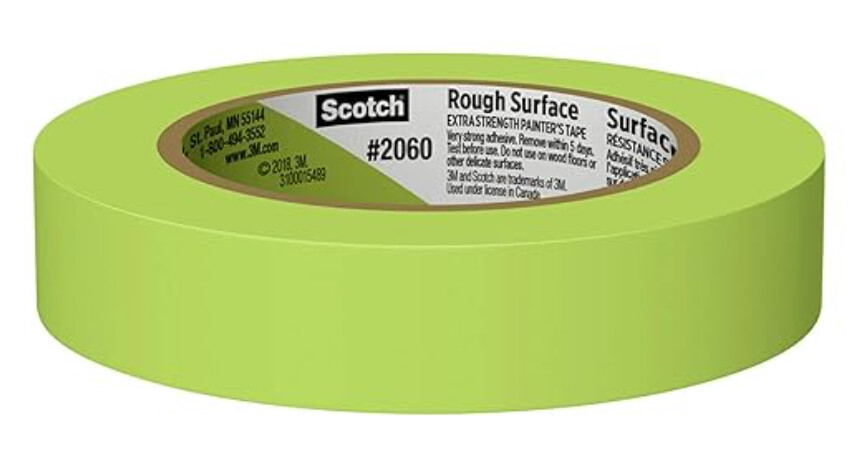
3M Rough surface extra strength masking tape+ Loctite Professional Superglue (not the expensive stuff). I learned about this tape here: Superglue Workholding
APT Powder coating tape + Loctite Professional Superglue.
With both of the above, I lightly sanded the aluminum surfaces with 240 grit sandpaper. I cleaned the powder coat tape with acetone and wiped the masking tape with 99% IPA. and clamped for 2 hours.
I then submerged the assembly in flood coolant for two hours. The result, both bonds were strong and required lots of force to separate them. I was surprised to find that the masking tape did not break down at all even after a 2 hour soak in flood coolant (8% Castrol MB50). The powder coating tape also showed no sign of breaking down at all. Both are a completely viable solution from what I can see.
With respect to the powder coating tape, the only thing I did differently from my past failure was sanding it with 220 sand paper instead of the Scotch bright pad I used the first time. I think this really matters. Your really have to rough up the surface of the powder coating tape.
I suspect if you want to use the masking tape, you probably don’t even have to wipe it with IPA. Superglue seems to stick to it well and I have never used it in the past on other masking tapes. I’m not sure if I like the powder coating tape any better than the masking tape, but you certainly have to sand it well if you want to use it and it costs about twice as much. If I had to do a job that spread a few day I may use the powder coating tape.
As for the Loctite professional vs the Loctite 480 which is many times more costly, I am going to use it tomorrow on the actual part I am machining just to be on the safe side and because it is a small part with little surface area…. and I’m just not in the mood to break another end mill. But I honestly think in the future on larger parts I will definitely stick with the Loctite Professional.
Best… Richard
PS: I did find both samples fairly hard to separate. I heated one corner with a butane torch for a minute or two and pried a chisel between them and then they came loose.
Ok, the final verdict. I made a number of these parts using the green tape and inexpensive Loctite professional. This combination works great, even holding down the thin areas of this part with no problem at all. As a test, I soaked the base that was holding the part for 48 hours in flood coolant and the tape did not break down. I would be comfortable using this combo anytime.
 I repeated my original approach using 3M extreme strength masking tape and it held up while machining a small part…. but it seemed too easy to remove. This makes me less confident that it would work for a longer run.